In a competitive business environment, IT departments face constant pressure to maximize their impact while managing a lean budget. The objective is not simply to cut costs but to strategically reallocate resources, transforming the IT function from a cost center into a powerful driver of innovation and business value. Successfully implementing effective IT cost reduction strategies is the key to unlocking capital that can be reinvested into growth initiatives, competitive advantages, and long term stability.
This guide provides a comprehensive and actionable roundup of ten powerful approaches to optimize your IT spending. We move beyond generic advice to offer specific, practical steps you can take immediately. The strategies cover the essential pillars of IT management: people, processes, and technology, with a strong emphasis on modern cloud environments.
Readers will learn how to master cloud cost management through techniques like rightsizing compute instances, scheduling idle resources, and leveraging reserved instances. We will also explore crucial areas such as software license optimization, IT asset lifecycle management, and the financial benefits of adopting Infrastructure as Code (IaC). Each section is designed to provide clear implementation details, potential savings, and relevant examples, equipping you with the knowledge to build a more efficient and financially sustainable IT organization.
1. Cloud Migration and Optimization
Transitioning IT infrastructure from on-premise data centers to cloud platforms like AWS, Azure, or Google Cloud is a foundational IT cost reduction strategy. This move replaces significant capital expenditure (CapEx) on physical hardware with a more flexible operational expenditure (OpEx) model. Instead of buying, housing, and maintaining servers, you leverage a pay-as-you-go pricing structure, paying only for the resources you consume.
This strategy is particularly effective for businesses seeking to reduce operational overhead tied to data center management, including power, cooling, and physical security. Companies like Netflix and GE have famously migrated vast portions of their operations to the cloud, with GE reporting infrastructure cost reductions of up to 40%. The core benefit lies in converting fixed costs into variable costs that can scale with business demand.
How to Implement Cloud Migration and Optimization
Executing a successful cloud strategy involves more than just lifting and shifting applications. Continuous optimization is crucial for maximizing savings.
- Assess and Prioritize Workloads: Start by migrating non-critical, stateless applications. This approach minimizes risk and allows your team to build expertise before moving complex, mission-critical systems.
- Right-Size Your Resources: A common mistake is overprovisioning cloud instances. Use cloud monitoring tools to analyze actual CPU and memory usage, then adjust instance sizes to match the real needs of your applications.
- Automate Waste Elimination: One of the most significant sources of wasted cloud spend is idle compute resources. Development, staging, and testing environments often run 24/7 but are only actively used during business hours.
Pro Tip: Automating the shutdown of non-production resources during off-hours can immediately cut their compute costs by up to 70%. Tools like CLOUD TOGGLE simplify this process, allowing you to schedule server uptime without complex scripting or granting engineers broad account permissions.
By adopting a migrate-and-optimize mindset, you not only reduce upfront hardware costs but also unlock ongoing savings through efficient resource management. This dual approach makes cloud adoption one of the most impactful IT cost reduction strategies available today. For a deeper dive into controlling cloud expenses, you can explore more on effective cloud cost optimisation techniques.
2. IT Outsourcing and Managed Services
Outsourcing IT functions to a specialized third-party provider is a powerful strategy for converting unpredictable operational costs into a fixed, manageable expense. This approach involves transferring responsibility for specific tasks, from infrastructure management to application support, to a managed services provider (MSP). By doing so, organizations can tap into expert knowledge and economies of scale they could not achieve internally.
This strategy is highly effective for businesses aiming to shed the financial burden of hiring, training, and retaining a large in-house IT team. It allows internal resources to focus on core business objectives and strategic innovation rather than routine maintenance. For instance, major consulting firms like Accenture and IBM have built entire service lines around managing IT operations for clients, often delivering cost savings of 20-30% by optimizing processes and leveraging global talent pools.
How to Implement IT Outsourcing and Managed Services
A successful outsourcing partnership depends on clear communication, well-defined expectations, and meticulous planning from the start.
- Clearly Define SLAs and Performance Metrics: Your contract must include specific Service Level Agreements (SLAs) that outline uptime guarantees, response times, and key performance indicators (KPIs). These metrics are essential for holding your vendor accountable.
- Maintain In-House Oversight: While you transfer operational tasks, it is crucial to retain some in-house expertise. This core team will manage the vendor relationship, oversee performance, and ensure the provider's activities align with your business goals.
- Plan a Meticulous Transition: Create a detailed plan for knowledge transfer and the transition of responsibilities. A poorly managed handover can lead to service disruptions and negate potential cost savings.
Pro Tip: Start with a co-sourcing model for a non-critical function. This allows you to test a vendor's capabilities and cultural fit with lower risk before committing to a larger, more integrated partnership.
By strategically outsourcing, you can gain access to specialized skills, improve service quality, and achieve significant IT cost reduction. This model transforms your IT department from a cost center into a strategic enabler. For those interested in outsourcing cloud-specific tasks, you can learn more about the benefits of cloud management services.
3. Virtualization and Server Consolidation
Virtualization is a powerful IT cost reduction strategy that involves running multiple virtual machines (VMs) on fewer physical servers. By abstracting operating systems and applications from the underlying hardware, this consolidation approach dramatically increases server utilization rates, often from a mere 5-15% to as high as 80%. This leads to a significant reduction in hardware, power, cooling, and data center space requirements.
This technique is especially beneficial for organizations with sprawling on-premise infrastructure. Instead of dedicating a physical server to each application, multiple workloads can coexist safely on a single, more powerful machine. Major companies have leveraged this for massive savings; for instance, Yahoo famously reduced its infrastructure costs by 40% through extensive server consolidation, and many financial institutions have consolidated dozens of data centers down to just a few core facilities.
How to Implement Virtualization and Consolidation
A successful virtualization project requires careful planning to maximize resource efficiency without compromising performance.
- Conduct Thorough Capacity Planning: Before migrating, analyze the resource requirements (CPU, memory, storage) of your existing physical servers. This data will help you determine the appropriate density of VMs per host and prevent performance bottlenecks.
- Monitor VM Performance Continuously: Once virtualized, use monitoring tools to track resource usage and identify potential contention issues. Proactive monitoring ensures that mission-critical applications receive the resources they need to perform optimally.
- Implement Robust Backup and Recovery: Consolidating many workloads onto fewer physical hosts increases the impact of a single hardware failure. A robust, automated backup and disaster recovery strategy for your VMs is non-negotiable.
Pro Tip: Start with low-risk, non-critical applications such as development and testing environments. This allows your team to gain experience with virtualization platforms like VMware or Hyper-V before moving production workloads, minimizing operational risk.
By consolidating servers through virtualization, you convert underutilized capital assets into a highly efficient, streamlined infrastructure, unlocking substantial capital and operational savings.
4. Open Source Software Adoption
Replacing expensive proprietary software with open source alternatives is a powerful IT cost reduction strategy that directly eliminates licensing and subscription fees. Open source software (OSS) like Linux, Apache, and PostgreSQL offers robust, enterprise grade functionality without the high costs associated with commercial vendors. The core principle is leveraging community developed and maintained software to power critical business operations.
This approach is highly effective for reducing ongoing operational expenditures, especially for core infrastructure components like operating systems, web servers, and databases. Tech giants like Google and Facebook have built their massive infrastructures on open source technology, saving billions in licensing costs. Similarly, NASA leverages Linux to power its high performance computing clusters, demonstrating the reliability and scalability of OSS for even the most demanding workloads.
How to Implement Open Source Software Adoption
A successful transition to open source requires careful planning and a shift in how your team approaches software support and maintenance.
- Assess and Pilot with Non-Critical Systems: Begin by identifying low risk areas where you can pilot open source alternatives. Replacing a development database with PostgreSQL or a secondary web server with Apache allows your team to build skills and confidence before migrating mission critical systems.
- Evaluate Total Cost of Ownership (TCO): While OSS eliminates licensing fees, it's crucial to evaluate the TCO. Factor in costs for implementation, training your staff, and potential professional support services from vendors like Red Hat or Canonical if in house expertise is limited.
- Invest in Training and Community Engagement: Equip your IT team with the necessary skills to manage and troubleshoot the new platforms. Encourage them to participate in relevant open source communities, which are invaluable resources for support, best practices, and innovative solutions.
Pro Tip: When evaluating open source options, prioritize projects with active developer communities, comprehensive documentation, and a clear long term roadmap. A vibrant community is often a better indicator of a project's health and longevity than a corporate backing alone.
By strategically adopting open source software, organizations can significantly reduce software expenditure while gaining greater flexibility and control over their technology stack. This makes OSS adoption a cornerstone of any comprehensive IT cost reduction strategy.
5. Software License Optimization and Compliance
Systematically auditing, managing, and optimizing software licenses is a critical IT cost reduction strategy that directly impacts the bottom line. It involves preventing overpayment for software by eliminating redundant, underutilized, or entirely unused licenses. This approach not only cuts unnecessary operational spending but also mitigates the significant legal and financial risks associated with non-compliance and software audits.
The scale of this issue is substantial. A Forrester study revealed that an average of 30% of enterprise software licenses go unused, representing a massive waste of resources. Companies like Hewlett-Packard have reportedly reclaimed over $20 million by identifying and decommissioning unused software. By implementing a disciplined management process, organizations can convert these hidden expenses into tangible savings and improve overall asset visibility.
How to Implement Software License Optimization
Effective license management requires a proactive, data-driven approach rather than a reactive one. Establishing clear processes and leveraging the right tools are key to maximizing savings and ensuring compliance.
- Implement Software Asset Management (SAM): Deploy a dedicated SAM tool like Flexera or Snow Software to gain a centralized, real-time view of all software assets, their deployment, and usage patterns across the organization.
- Conduct Regular Audits: Don't wait for a vendor audit. Perform your own internal license audits on a quarterly basis to identify unused software, track compliance with licensing agreements, and reclaim licenses from former employees.
- Establish Clear Purchasing Policies: Create and enforce standardized policies for software procurement. This prevents duplicate purchases by different departments and ensures all new software aligns with pre-negotiated enterprise agreements.
Pro Tip: When negotiating with vendors like Microsoft or Adobe, push for multi-year enterprise license agreements (ELAs) or consider usage-based licensing models. These options often provide significant volume discounts and greater flexibility compared to purchasing individual perpetual licenses.
By treating software licenses as valuable, manageable assets, you can unlock substantial savings that are often hidden in plain sight. This disciplined practice is a powerful component of any comprehensive IT cost reduction strategy, turning a potential liability into a source of financial efficiency.
6. Data Center Consolidation and Right-Sizing
For organizations with a significant on-premise footprint, consolidating physical data centers is a powerful IT cost reduction strategy. This approach involves reducing the number of data centers, downsizing facilities, and migrating workloads onto more efficient, modern infrastructure. The goal is to eliminate redundant hardware and reduce the substantial overhead associated with real estate, power, cooling, and physical security.
This strategy directly tackles fixed capital and operational expenditures tied to maintaining multiple, often underutilized, facilities. For example, the U.S. Department of Defense successfully executed a massive consolidation initiative, closing over 600 data centers to streamline operations and cut costs. Similarly, Microsoft and Yahoo have undertaken large-scale consolidation projects, moving from numerous legacy sites to fewer, hyper-efficient facilities, realizing significant long-term savings.
How to Implement Data Center Consolidation
A successful consolidation project requires meticulous planning and phased execution to minimize operational disruption while maximizing financial benefits.
- Conduct a Comprehensive Workload Assessment: Begin by cataloging all applications and their underlying infrastructure dependencies. This analysis will identify which systems are critical, which can be retired, and which are candidates for virtualization or migration.
- Plan Phased Migrations: Avoid a "big bang" approach. Migrate workloads in carefully planned phases, starting with less critical applications to build experience and refine the process. This minimizes risk to business continuity.
- Invest in Energy-Efficient Infrastructure: When consolidating, upgrade to modern hardware and cooling systems. Monitor key metrics like Power Usage Effectiveness (PUE) to ensure the new environment is optimized for efficiency.
Pro Tip: Consider moving non-core workloads to a colocation facility. This allows you to exit a privately owned data center without taking on the full management burden, converting a fixed real estate cost into a more predictable operational expense.
By strategically reducing your physical IT footprint, you can unlock substantial savings in operational costs and reallocate capital toward more innovative, value-generating projects. This makes data center optimization a crucial component of any comprehensive IT cost reduction strategy.
7. IT Asset Management (ITAM) and Lifecycle Planning
Implementing a robust IT Asset Management (ITAM) program is a strategic approach to cost reduction that focuses on systematically tracking and managing the entire lifecycle of your technology assets, from procurement to disposal. This discipline replaces reactive, ad-hoc purchasing with a proactive, data-driven strategy. By understanding what assets you own, where they are, who uses them, and their condition, you can eliminate wasteful spending, optimize usage, and extend the lifespan of your hardware and software.
This strategy is highly effective for organizations looking to gain control over sprawling IT inventories and reduce unnecessary refresh costs. For example, many Fortune 500 companies have successfully used ITAM to cut their hardware replacement expenditures by 20-25%. The core benefit is converting unknown and unmanaged asset costs into a predictable, optimized, and transparent budget line item.
How to Implement ITAM and Lifecycle Planning
A successful ITAM program relies on visibility, process, and planning. It’s about maximizing the value you get from every dollar spent on technology assets.
- Implement a Centralized ITAM Tool: Deploy a comprehensive ITAM platform like ServiceNow, BMC Helix, or Snow Software. This creates a single source of truth for all hardware and software assets, tracking details like purchase date, warranty status, user assignment, and maintenance history.
- Establish Clear Asset Ownership: Assign clear ownership and accountability for all IT assets. When employees are responsible for the equipment they use, it encourages better care and helps streamline the recovery process when they leave the organization, preventing asset loss.
- Plan Refresh Cycles Proactively: Instead of replacing hardware on a fixed, arbitrary schedule, use data to plan refresh cycles based on the total cost of ownership (TCO). Factor in performance degradation, increasing maintenance costs, and warranty expiration to decide the optimal time for replacement.
Pro Tip: Create a formal process for asset disposal that focuses on value recovery. Refurbishing and reselling older but still functional equipment, or securely wiping and donating it, can generate revenue or tax benefits, turning a cost center into a value-add activity.
By adopting a disciplined ITAM and lifecycle planning approach, you not only avoid redundant purchases but also ensure you are maximizing the ROI on your existing technology investments. This makes ITAM a critical component of any comprehensive IT cost reduction strategy.
8. Automation and Process Optimization
Automating repetitive IT tasks, workflows, and processes is a powerful IT cost reduction strategy that shifts focus from manual intervention to streamlined, technology-driven execution. By using scripting, Robotic Process Automation (RPA), and orchestration tools, organizations can eliminate the need for human involvement in high-volume, rule-based activities. This directly reduces operational expenses tied to manual labor and minimizes the financial impact of human error.

This approach is highly effective for reducing administrative overhead and improving service delivery speed. For instance, financial institutions have successfully automated user account provisioning, saving thousands of hours annually. Similarly, IT operations centers use RPA to automatically route, escalate, and even resolve support tickets, freeing up skilled technicians to focus on complex strategic initiatives instead of predictable, repeatable tasks. The core value lies in converting labor costs into a more efficient, one-time investment in technology.
How to Implement Automation and Process Optimization
A successful automation initiative requires a strategic approach that prioritizes high-impact processes and manages organizational change effectively.
- Identify and Prioritize Opportunities: Begin by identifying high-volume, repetitive, and error-prone manual tasks. Use process mining tools to analyze existing workflows and pinpoint the best candidates for automation, such as user onboarding, data entry, or system backups.
- Select the Right Tools: Choose the appropriate technology for the task. Simple scripts may suffice for basic automation, while platforms like UiPath or Automation Anywhere are ideal for complex cross-application workflows. For infrastructure, tools like Ansible and Kubernetes provide powerful orchestration capabilities.
- Measure and Communicate ROI: Track key metrics like time saved, error rate reduction, and process cycle time before and after implementation. Quantifying the return on investment helps secure buy-in for future automation projects and demonstrates the value to the business.
Pro Tip: Involve the process owners, the employees who perform the tasks daily, in the automation design. Their firsthand knowledge is invaluable for creating a practical and effective automated workflow and helps ensure smooth adoption.
By systematically automating manual processes, you not only achieve significant cost savings but also enhance operational efficiency and accuracy. This strategic move allows your IT team to transition from reactive support to proactive innovation, making it a critical component of modern IT cost reduction strategies.
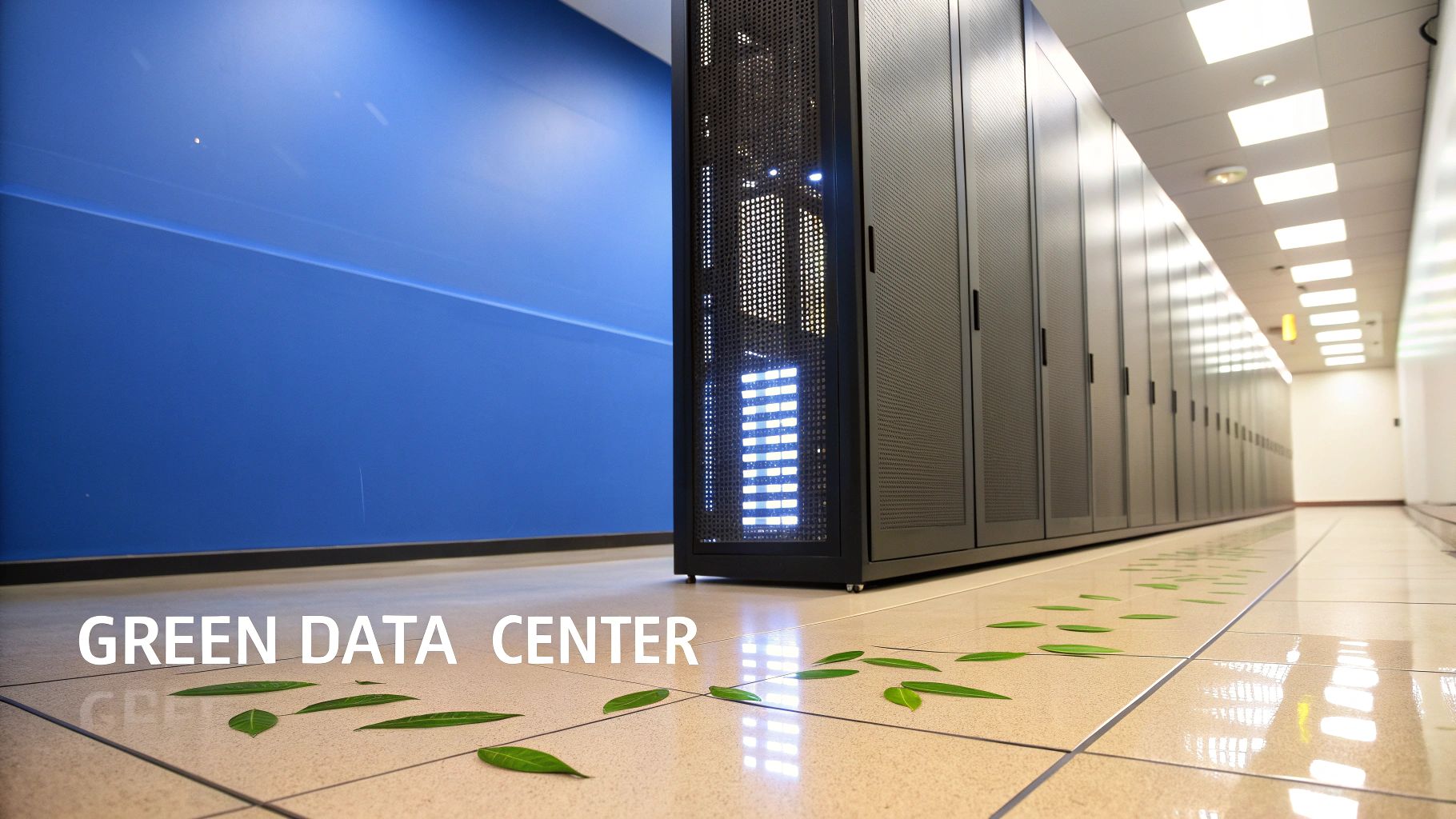
9. Energy Efficiency and Green IT Initiatives
Implementing Green IT initiatives is a powerful, yet often overlooked, IT cost reduction strategy. This approach focuses on minimizing the energy consumption of IT infrastructure through more efficient hardware, optimized data center operations, and sustainable power management practices. By reducing energy usage, businesses directly cut operational expenses related to electricity and cooling, while also aligning with corporate social responsibility and environmental goals.
This strategy tackles a significant component of on-premise data center costs. Tech giants have led the way, with Google famously using AI to optimize its data center cooling systems, resulting in a 40% reduction in energy used for cooling. Similarly, Microsoft’s Project Natick, which involved submerging a data center in the ocean, demonstrated dramatic energy savings for cooling. These examples show how innovative thinking in sustainability can yield substantial financial returns.
How to Implement Energy Efficiency and Green IT Initiatives
Successfully lowering your IT energy footprint requires a systematic approach that combines measurement, modernization, and smart operational practices.
- Conduct an Energy Audit: Begin by identifying your biggest energy consumers. Use power metering and monitoring tools to get a clear baseline of where electricity is being used across your servers, cooling systems, and networking equipment.
- Modernize and Virtualize: Replace aging, inefficient hardware with modern, ENERGY STAR-rated servers. At the same time, increase server virtualization to consolidate workloads onto fewer physical machines, drastically improving hardware utilization and reducing the overall power draw.
- Optimize Your Environment: Fine-tune your data center's cooling systems. Simple actions like managing airflow with hot/cold aisle containment or raising the ambient temperature slightly can yield significant savings without impacting performance.
Pro Tip: Set a clear target for your Power Usage Effectiveness (PUE). PUE is the ratio of total facility energy to IT equipment energy. A lower PUE indicates a more efficient data center, and aiming for a target like 1.5 or lower provides a measurable goal for your cost reduction efforts.
By integrating Green IT, you not only trim direct operational costs but also enhance your brand's reputation and contribute to sustainability goals. Even simple steps can move your organization toward a more efficient and environmentally conscious operation. You can read more about how sustainability initiatives translate into real-world wins.
10. Infrastructure as Code (IaC) and DevOps Practices
Adopting Infrastructure as Code (IaC) and DevOps practices transforms IT operations from a manual, error-prone process into an automated, efficient, and repeatable workflow. IaC involves managing and provisioning infrastructure through machine-readable definition files, rather than physical hardware configuration or interactive configuration tools. This approach treats your infrastructure, including servers, networks, and databases, as software that can be versioned, tested, and deployed with consistency.
This strategy is one of the most effective it cost reduction strategies for organizations looking to minimize operational overhead and accelerate innovation. By automating infrastructure deployment and management, companies drastically reduce the labor costs associated with manual setups and fixes. For example, AWS customers have reported reducing infrastructure provisioning time from weeks to just minutes. Similarly, Netflix leverages IaC and DevOps principles to manage its massive global infrastructure, enabling rapid scaling and resilience while controlling operational expenses.
How to Implement IaC and DevOps Practices
Successfully integrating IaC and DevOps requires a cultural shift towards collaboration and automation, supported by the right tools and processes. A phased implementation is key to long-term success.
- Choose Appropriate IaC Tools: Select tools that fit your team's skills and cloud environment. Popular choices include Terraform for multi-cloud deployments, AWS CloudFormation for AWS-native infrastructure, and Ansible for configuration management.
- Start with Non-Critical Applications: Begin your IaC journey by automating the infrastructure for a new project or a non-critical application. This allows your team to learn and refine processes in a low-risk environment before migrating legacy systems.
- Establish Version Control and Code Reviews: Treat your infrastructure code just like application code. Store it in a version control system like Git and implement a mandatory code review process to catch errors, enforce standards, and share knowledge across the team.
Pro Tip: Integrate automated testing into your IaC pipeline. Tools like Terratest or InSpec can validate that your infrastructure is configured correctly before it's deployed, preventing costly misconfigurations and downtime. This proactive approach ensures stability and security.
By embracing IaC and DevOps, you not only reduce direct operational costs but also improve deployment speed, enhance system reliability, and free up your engineering talent to focus on delivering business value instead of managing infrastructure manually.
Top 10 IT Cost-Reduction Strategies Comparison
| Strategy | Implementation complexity | Resource requirements | Expected outcomes | Ideal use cases | Key advantages |
|---|---|---|---|---|---|
| Cloud Migration and Optimization | Medium to High (planning & migration effort) | Cloud expertise, migration tools, network capacity, budget | Reduced CapEx, scalable resources, improved redundancy | Variable workloads, DR, global scale, modern apps | Pay-per-use scale, built-in redundancy, faster provisioning |
| IT Outsourcing and Managed Services | Low to Medium (contracting & governance) | Vendor selection, SLAs, oversight team | Predictable Opex, access to specialist skills, 24/7 support | Non-core IT functions, limited internal staff, cost control | Cost predictability, specialist expertise, reduced internal burden |
| Virtualization and Server Consolidation | Medium (design & capacity planning) | Hypervisors, consolidation tools, skilled admins | Fewer physical servers, higher utilization, lower power/cooling | Data center consolidation, legacy server reduction | Improved utilization, lower hardware and energy costs |
| Open Source Software Adoption | Low to Medium (integration & support readiness) | In-house expertise, training, optional support contracts | Lower licensing costs, customizable stacks, vendor independence | Cost-sensitive projects, customizable platforms, developer-led shops | No license fees, transparency, high customizability |
| Software License Optimization and Compliance | Low to Medium (audit and tooling) | SAM tools, reporting, license governance team | Immediate cost savings, compliance, reclaimed licenses | Enterprises with large software spend, audited environments | Fast ROI, reduced legal risk, better asset visibility |
| Data Center Consolidation and Right-Sizing | High (large migrations, long timeline) | Migration teams, capital investment, detailed planning | Major real-estate & energy savings, centralized ops | Organizations with many facilities or high facility costs | Significant facility and energy cost reduction, ops efficiency |
| IT Asset Management (ITAM) and Lifecycle Planning | Medium (process and tool rollout) | ITAM platform, governance, asset owners | Extended asset life, better budgeting, fewer emergency buys | Large estates, regulated sectors, multi-site organizations | Better capital planning, reduced unplanned failures, compliance |
| Automation and Process Optimization | Medium (process redesign & tooling) | Automation/RPA tools, process analysts, development effort | Labor cost reduction, faster processing, fewer errors | High-volume repetitive tasks, IT operations, provisioning | Lower labor costs, improved SLAs, scalable operations |
| Energy Efficiency and Green IT Initiatives | Medium to High (capex and monitoring) | Energy-efficient hardware, cooling upgrades, metering | Reduced energy costs, lower carbon footprint, rebates | Large data centers, sustainability-driven organizations | Energy savings, reputational and regulatory benefits |
| Infrastructure as Code (IaC) and DevOps Practices | Medium (cultural + tooling change) | IaC tools, CI/CD pipelines, training, version control | Faster deployments, fewer manual errors, repeatability | Cloud-native apps, frequent deployments, agile teams | Faster time-to-market, consistent environments, automation |
Putting Your Strategy into Action
The journey through the landscape of IT cost reduction strategies reveals a powerful truth: financial optimization is not a one-time project but a continuous, strategic discipline. We have explored a wide array of tactics, from the foundational shift of cloud migration and the efficiency gains of server consolidation to the operational elegance of Infrastructure as Code (IaC) and the financial prudence of software license optimization. Each strategy represents a lever you can pull to transform your IT department from a traditional cost center into a lean, value-driven engine for business growth.
The key is to understand that these strategies are not isolated islands. True transformation happens at their intersection. For example, migrating to the cloud is just the first step; layering on aggressive automation, diligent IT Asset Management (ITAM), and DevOps practices is what unlocks exponential savings and operational agility. Similarly, adopting open-source software is most effective when paired with a robust process for managing licenses and support, ensuring you trade one cost for another, more manageable one.
Synthesizing Your Approach: From Tactics to Culture
To make these IT cost reduction strategies stick, you must move beyond a simple checklist. The goal is to cultivate a culture of cost-consciousness that permeates every level of your technology organization. This cultural shift is the most critical component for long-term success.
Here are the core principles to guide your implementation:
- Prioritize with a Phased Rollout: Don't try to boil the ocean. Start with the "low-hanging fruit" that offers the highest impact for the least effort. For many, this means tackling idle cloud resources, a significant and often overlooked source of waste. From there, you can build momentum and tackle more complex initiatives like data center consolidation or a full-scale IT outsourcing evaluation.
- Empower Teams with Visibility: You cannot optimize what you cannot see. Implementing strong tagging policies, chargeback models, and accessible dashboards gives engineering teams direct insight into the cost implications of their decisions. This visibility fosters accountability and encourages proactive optimization from the ground up.
- Embrace Automation Relentlessly: Manual processes are not only slow and error-prone; they are expensive. Every strategy we discussed, from provisioning infrastructure with IaC to scheduling non-production environments to power down, is amplified by automation. It's the key to making cost savings consistent, scalable, and sustainable.
- Measure, Iterate, and Report: Define clear Key Performance Indicators (KPIs) for your cost-saving initiatives. Track metrics like cloud spend per customer, cost per transaction, or percentage of virtualized servers. Regularly review these metrics and communicate your wins across the organization to reinforce the value of your efforts.
Ultimately, mastering these IT cost reduction strategies is about more than just trimming a budget line. It is about strategic resource allocation. Every dollar saved on inefficient infrastructure or redundant software licenses is a dollar that can be reinvested into innovation, talent development, and projects that directly contribute to your company's bottom line. By adopting a proactive, multi-faceted, and culturally embedded approach to cost management, you are not just saving money; you are building a more resilient, agile, and competitive business for the future. The first step, however small, is the most important one.
Ready to capture some of the easiest and most significant cloud savings? CLOUD TOGGLE specializes in automating the scheduling of non-production AWS and Azure resources, ensuring you only pay for compute when you actually need it. Start your free trial and see how much you can save by visiting CLOUD TOGGLE today.