Cloud costs are one of the fastest‑growing expenses for engineering, DevOps, and FinOps teams, especially in development, test, and staging environments that often run 24/7 without delivering business value.
Two well‑known tools that address this problem are CLOUD TOGGLE and ParkMyCloud. Both help teams reduce cloud spend by automating when workloads run, but they differ in focus, complexity, and day‑to‑day usability.
This article compares CLOUD TOGGLE and ParkMyCloud across features, ease of use, cost savings, and ideal use cases – helping you decide which solution best fits your organisation.
What Is CLOUD TOGGLE?
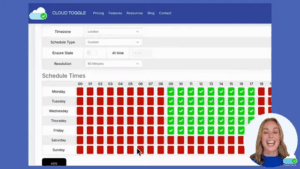
CLOUD TOGGLE is a lightweight automation platform designed to reduce cloud costs by intelligently scheduling AWS and Azure virtual machines. It allows teams to automatically start and stop workloads based on working hours, project cycles, or custom schedules – removing the need for scripts, cron jobs, or manual intervention.
CLOUD TOGGLE is built with DevOps and engineering teams in mind, offering:
- Automated VM start/stop scheduling
- A centralised, multi‑account dashboard
- Secure, agentless integration with AWS and Azure
- Full audit logs and access controls
The goal is simple: eliminate wasted cloud spend without adding operational complexity.
What Is ParkMyCloud?
ParkMyCloud is a cloud cost‑reduction tool that focuses on identifying and stopping idle cloud resources. It supports AWS and Azure environments and provides scheduling and policy‑based automation to ensure non‑production workloads do not run unnecessarily.
ParkMyCloud is commonly used by organisations looking for:
- Automated parking of idle resources
- Policy‑driven cost controls
- Central visibility across cloud accounts
It is often positioned as an enterprise‑ready solution with governance and reporting features aimed at larger organisations.
Feature Comparison: CLOUD TOGGLE vs ParkMyCloud
| Feature | CLOUD TOGGLE | ParkMyCloud |
|---|---|---|
| AWS support | ✔ Full | ✔ Full |
| Azure support | ✔ Full | ✔ Full |
| Automated VM scheduling | ✔ Yes | ✔ Yes |
| Custom schedules | ✔ Highly flexible | ✔ Yes |
| Multi‑account management | ✔ Yes | ✔ Yes |
| Role‑based access control | ✔ Yes | ✔ Yes |
| Audit logs | ✔ Detailed | ✔ Available |
| Agentless deployment | ✔ Yes | ✔ Yes |
| Dev/Test optimisation focus | ✔ Strong | ✔ Moderate |
Both platforms automate cost savings, but CLOUD TOGGLE places greater emphasis on simple, predictable scheduling, while ParkMyCloud leans more toward policy‑driven parking.
Ease of Setup and Daily Use
CLOUD TOGGLE
CLOUD TOGGLE is designed for fast onboarding and minimal configuration:
- Clear, intuitive dashboard
- Pre‑defined scheduling patterns (e.g. weekdays only)
- No infrastructure or agents to deploy
- Easy for engineering teams to self‑manage
Teams can usually see savings within days of deployment.
ParkMyCloud
ParkMyCloud offers robust functionality but can feel more complex depending on environment size:
- Policies and schedules may require more upfront planning
- Best suited to organisations with formal governance processes
- Powerful, but sometimes heavier than needed for simple scheduling use cases
Ease‑of‑use winner: CLOUD TOGGLE
Cost Savings and Return on Investment
Both tools deliver savings by reducing idle runtime for cloud resources, particularly in non‑production environments.
Common savings scenarios include:
- Stopping VMs overnight and on weekends
- Automatically managing development and QA environments
- Enforcing schedules through tags or policies
Example
A team running 40 development D2sV3 VMs in the Azure East US region 24/7:
| Scenario | Weekly Cost |
| No scheduling | $645.20 |
| Automated scheduling | $153.60 |
| Estimated savings | ~76% |
CLOUD TOGGLE is often preferred where teams want clear, immediate savings without complex policy frameworks.
Security and Compliance
Both platforms integrate securely using cloud‑native permissions:
- No credentials stored on VMs
- Least‑privilege access models
- Full visibility into changes and schedules
CLOUD TOGGLE focuses on simplicity and transparency, while ParkMyCloud offers broader governance features for larger organisations.
When CLOUD TOGGLE Is the Better Choice
CLOUD TOGGLE is ideal if:
- You primarily use AWS and Azure
- You want fast deployment and immediate savings
- Your focus is dev/test and non‑production cost control
- You want engineers to manage schedules themselves
- You prefer simplicity over heavy policy frameworks
Best for: startups, scale‑ups, and engineering‑led teams.
When ParkMyCloud May Be a Better Fit
ParkMyCloud may be better if:
- You have large, multi‑team cloud estates
- You require formal governance workflows
- You want deeper policy‑driven automation
- Cost optimisation is centrally managed
Best for: larger enterprises with structured FinOps programmes.
CLOUD TOGGLE vs ParkMyCloud: Summary
| Category | CLOUD TOGGLE | ParkMyCloud |
| Setup speed | ⭐⭐⭐⭐ | ⭐⭐⭐ |
| Day‑to‑day simplicity | ⭐⭐⭐⭐ | ⭐⭐⭐ |
| AWS & Azure optimisation | ⭐⭐⭐⭐ | ⭐⭐⭐⭐ |
| Governance depth | ⭐⭐⭐ | ⭐⭐⭐⭐ |
| Dev/Test focus | ⭐⭐⭐⭐ | ⭐⭐⭐ |
Bottom line: If you want a fast, intuitive way to reduce AWS and Azure costs without adding operational overhead, CLOUD TOGGLE is a strong alternative to ParkMyCloud – especially for engineering‑driven teams focused on eliminating wasted runtime.
Ready to Reduce Your Cloud Costs?
Automated scheduling is one of the safest and quickest ways to cut cloud spend. If your goal is:
- Immediate, measurable savings
- Simple schedules anyone on the team can understand
- Clear visibility into what’s running and when
then CLOUD TOGGLE offers a clean, practical approach to cloud cost optimisation without complexity. Take a look today, and start saving money on your cloud bill!: www.cloudtoggle.com