Let's be honest: staring at a surprisingly high cloud bill feels a lot like getting a massive, unexpected utility statement. One month you’re perfectly on budget, and the next you're scrambling to figure out why spending suddenly spiked by 40%. If this sounds familiar, you're not alone. This is the unpredictable reality many businesses face.
Taming the Unpredictable Cloud Bill
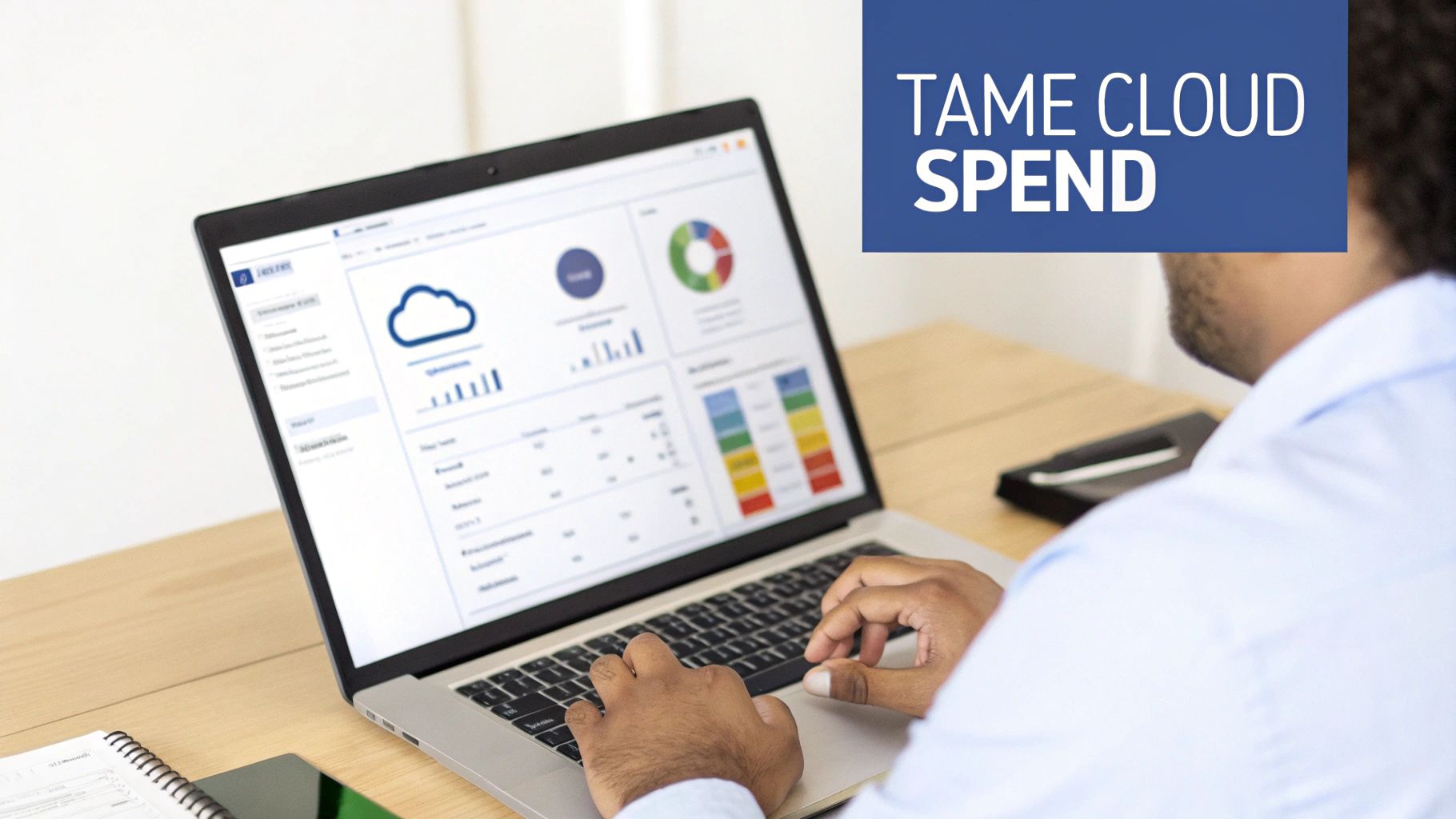
The cloud’s greatest strength, its flexibility, is also its biggest financial pitfall. It's incredibly easy for a developer to spin up a new virtual machine for a quick test, but it’s just as easy for that machine to be forgotten once the project is done. These "orphaned" resources, like unattached storage volumes or idle VMs, just keep running up the bill without delivering any value.
Why Cloud Costs Spiral Out of Control
The problem can get out of hand, fast. A single misconfigured server or a fleet of underused instances can silently bleed your budget dry. It's the digital equivalent of leaving all the lights and appliances on in a massive, empty office building 24/7. You're paying for the power, but nobody's there to use it.
This issue only gets worse as your company grows and embraces more complex cloud setups. With global public cloud spending projected to rocket past $679 billion in 2025 and over 85% of organizations adopting a cloud-first strategy, the scale of the problem is massive. When you throw multi-cloud and hybrid environments into the mix, cost visibility becomes fragmented, making any kind of budget control feel nearly impossible. You can learn more about these cloud cost trends and their financial impact.
A cloud cost optimization platform gives you the central dashboard and automated rules to manage your cloud usage intelligently. It's the difference between just having raw electricity and installing a smart home system to control exactly where and when it gets used.
Regaining Control with a Dedicated Platform
This is where a cloud cost optimization platform steps in. It’s a specialized tool designed to give you back control. By pulling all your cloud resources into a single, unified view, these platforms shine a light on the dark corners of your spending and pinpoint exactly where the waste is happening. They are built to turn chaotic, runaway spending into a predictable and manageable part of your strategy.
The right platform lets you keep innovating without the fear of breaking the bank. It helps you get proactive by:
- Identifying unused or idle resources that can be safely shut down.
- Recommending rightsizing opportunities to match server power with what your applications actually need.
- Automating schedules to power down non-production environments like dev and test servers during nights and weekends.
Ultimately, a dedicated platform shifts your relationship with cloud spending from a reactive headache to a proactive strategy, making sure every dollar you spend is working for you.
How a Cloud Cost Optimization Platform Works
Think of a cloud cost optimization platform as a savvy financial manager for your entire cloud setup. While your cloud provider's native tools give you a basic bill, a dedicated platform goes much deeper. It digs into your usage habits, spots wasteful patterns, and then automates smart strategies to squeeze the most value out of every dollar you spend. It's the difference between looking at a bank statement and having an active fund manager.
At its core, any good platform really does three things well. It gives you unified visibility, applies intelligent automation, and puts actionable data into the hands of your teams. This is the one-two-three punch that unlocks major, sustainable savings that are nearly impossible to find manually.
Gaining Unified Visibility Across All Accounts
You can't control what you can't see. That's the first rule of cloud costs. Most companies aren't just in one cloud anymore; they're spread across AWS, Azure, and GCP, or they have dozens of separate accounts within a single provider. This setup creates blind spots where money just vanishes.
A cloud cost optimization platform solves this by plugging into all of your accounts and pulling all that spending data into one clean, consolidated dashboard.
This "single pane of glass" isn't just a nice-to-have. It means you can finally:
- Track spending across different departments, projects, and dev/test/prod environments from one screen.
- Spot trends and weird spikes in spending that you’d miss by looking at individual bills.
- Drill down into the nitty-gritty using data from sources like the AWS Cost and Usage Report to see what's really driving your costs. For a deeper dive, check out our guide on how to make sense of AWS Cost and Usage Reports explained.
By bringing all this information together, the platform cuts through the noise and gives you a true picture of your financial health in the cloud.
Applying Intelligent Automation to Cut Waste
Seeing the problem is only half the battle. The real magic of a cloud cost optimization platform is its ability to act on what it finds, automatically. Hunting down and killing wasteful resources by hand is a soul-crushing, error-prone job that just doesn't scale as your company grows.
Think of a dedicated platform as a tireless digital janitor for your cloud. It’s always on, constantly scanning for inefficiencies and cleaning them up based on rules you set, so waste never has a chance to pile up.
This automation comes in a few key forms. For instance, the platform can automatically shut down non-production servers on nights and weekends. That simple move alone can slash the compute costs for those resources by over 60%. It can also flag idle "zombie" assets like unattached storage volumes or forgotten VMs so you can get rid of them for good. This proactive cleanup means you're not leaving money on the table.
Empowering Teams with Actionable Data
Ultimately, a truly mature cost strategy involves everyone. A good platform empowers individual teams by giving them the data and tools to make cost-aware choices. Instead of having a central IT or FinOps team act as the "cost police," developers and engineers can see the financial impact of their work in real-time.
This creates a culture of FinOps, or financial accountability, where everyone shares ownership of the cloud bill. When a developer sees their test environment is costing the company hundreds of dollars a week, they’re much more likely to shut it down when they're done with it. The platform makes this possible by providing dead-simple reports, alerts, and controls that turn cost management into a collaborative, team-wide effort.
Essential Features That Drive Real Savings
A good cloud cost optimization platform does a lot more than just show you dashboards. It's an active toolkit with specific, automated features that directly translate into real money back in your budget. These aren’t just nice-to-haves; they are the engines that actively shrink your monthly bill and free up your team’s valuable time.
Knowing how each tool works is the first step. Each one is designed to tackle a common source of cloud waste, turning a complex headache into a simple, automated fix.
Automated Scheduling Your Way to Savings
One of the quickest wins in cloud cost control comes from automated scheduling. Think about it like putting your office lights on a timer. Why leave them on all night when nobody's there? The same logic applies to your non-production servers. There's no good reason to pay for development, testing, or staging environments to run 24/7 when your team is only using them during business hours.
This feature lets you set simple “on/off” schedules for any group of resources. A classic move is to power down development servers at 7 PM on weekdays and turn them back on at 7 AM, leaving them off all weekend. That one simple action can slash the compute costs for those machines by over 60% without anyone noticing a difference in their workflow.
Automated scheduling is the low-hanging fruit of cloud cost management. It is an easy, non-disruptive way to generate significant savings with minimal effort, making it a foundational feature of any effective cloud cost optimization platform.
Rightsizing Recommendations For Peak Efficiency
Next up is rightsizing recommendations. This feature is like having an efficiency expert constantly watching over your cloud infrastructure. It’s common for teams to overprovision resources "just in case," essentially paying for a V8 engine when a 4-cylinder would get the job done just fine.
A solid platform monitors metrics like CPU and memory usage over time. It then flags instances that are consistently underutilized and suggests smaller, cheaper alternatives that still meet all performance needs. Instead of guessing, your engineers get data-driven advice to eliminate waste without putting application stability at risk. You end up paying only for what you actually need.
This growing demand for smarter tools is why the global market for cloud cost management is taking off. Valued at roughly USD 9.8 billion in 2024, it's expected to grow at a compound annual rate of 17.2% through 2034. This surge is all about managing huge, complex cloud environments, with AI and machine learning making optimization tools even smarter. You can explore the full research on the cloud cost management market to see the whole picture.
Idle Resource Detection to Hunt Down Zombies
Another huge source of hidden costs is idle or "zombie" resources. These are the forgotten assets, such as unattached storage volumes, old test VMs, and unused load balancers, that just sit there, racking up charges hour after hour while doing absolutely nothing. Idle resource detection is the platform's secret weapon for sniffing out these abandoned assets across all your accounts.
The platform scans your entire environment and flags anything that isn't connected to a running application or providing any value. Think of a storage disk left behind after a server was deleted or a temporary IP address that was never released. By surfacing these zombie assets in a clear report, it becomes incredibly easy for your team to safely clean them up and stop the financial bleed.
Cross-Cloud Visibility For a Complete Picture
For any company using more than one cloud provider, cross-cloud visibility is a must-have. Trying to manage costs becomes a nightmare when you’re constantly jumping between AWS, Azure, and GCP consoles. A top-tier cost optimization platform brings everything together under one roof.
This unified dashboard pulls all your spending and usage data from every cloud account into one central view. It gets rid of the blind spots and lets you look at your entire cloud footprint as a whole. You can compare costs across providers, apply the same governance rules everywhere, and get a true picture of your total cloud spend without juggling a dozen different reports. It's the only way to build a cohesive and effective optimization strategy.
This table breaks down how these key features deliver concrete results for your business.
Platform Features vs. Business Outcome
| Platform Feature | Primary Function | Business Outcome |
|---|---|---|
| Automated Scheduling | Turns non-production resources off during idle periods (nights, weekends). | Reduced Compute Costs: Slashes spend on idle VMs and databases by 60% or more. |
| Rightsizing | Analyzes usage data to recommend smaller, cheaper instance types. | Improved Efficiency: Eliminates overprovisioning, ensuring you only pay for what you need. |
| Idle Resource Detection | Identifies and flags unused assets like unattached disks or IPs. | Waste Elimination: Stops paying for "zombie" resources that provide zero value. |
| Cross-Cloud Visibility | Aggregates cost and usage data from AWS, Azure, and GCP into one dashboard. | Strategic Oversight: Provides a complete financial picture for better decision-making. |
Ultimately, each feature is a tool designed not just to report on costs, but to actively reduce them, giving you more control and predictability over your cloud budget.
Calculating Your Return on Investment
Throwing another tool into your tech stack is one thing, but making a strategic investment with a clear financial upside is something else entirely. To really justify a cloud cost optimization platform, you have to look past the feature list and focus on what truly matters: measurable results. Calculating the return on investment (ROI) is how you get undeniable proof that the platform is worth every penny.
The simplest way to see the impact is by looking at your next monthly cloud bill. A good platform should deliver savings that blow past its subscription cost, often within the very first billing cycle. That's the one metric every single stakeholder, from the CFO to the engineering lead, understands immediately.
Key Performance Indicators for Success
To build a solid business case, you need to track a few key performance indicators (KPIs). These metrics go beyond just raw dollar savings to show the platform's full value, including giving your team their time back and making your financial planning less of a guessing game.
Here are three of the most important KPIs to keep an eye on:
- Percentage Reduction in Monthly Spend: This one is as straightforward as it gets. It shows the direct financial hit you’re making on wasted spend from automated scheduling, rightsizing, and shutting down idle resources. You'll want to track this month-over-month to show a clear, consistent drop in waste.
- Time Reclaimed by Engineers: Let's be honest, manually hunting for cost savings is a huge time suck that pulls your best engineers away from building great products. When you automate that grunt work, you give them back precious hours. You can even quantify this in salary hours saved and refocused on projects that actually drive revenue.
- Improved Budget Forecast Accuracy: Cloud bills are notoriously unpredictable. A platform that gives you real visibility and control lets your finance and operations teams forecast future spending with far more accuracy. No more nasty end-of-quarter surprises.
Real-World Scenarios and Financial Outcomes
Let's make this tangible. Imagine an e-commerce company heading into the holiday season. They can dodge costly budget overruns on their testing environments by using automated scheduling. The platform makes sure resources scale up when needed and, more importantly, power down when they aren't, keeping performance high without the waste.
Or think about a fast-growing gaming startup. A cloud cost optimization platform could scan their entire server fleet and spit out data-driven rightsizing recommendations. Just by making those changes, they could easily save $150,000 a year, freeing up a huge chunk of cash to pour back into game development and marketing. If you want to dive deeper into this topic, you can check out our guide on how to calculate percentage savings.
A strong ROI isn't just about saving money; it's about reallocating resources. The funds and engineering hours saved get reinvested into product development, customer acquisition, and strategic growth. Suddenly, a cost center becomes a competitive advantage.
The Undeniable Proof
The push for cloud cost optimization isn't just a trend; it's a top priority for IT leaders everywhere. In fact, recent data shows that 67% of CIOs rank it as a key IT priority for 2025. This focus is fueled by some incredible success stories. For example, Drift slashed its annual cloud costs by a massive $2.4 million, while Demandbase chopped its expenses by 36%.
These examples make the value crystal clear. A dedicated platform pays for itself by delivering hard savings, operational efficiencies, and predictable financial control. It's an essential tool for any business that's serious about getting its cloud infrastructure under control.
Choosing Between Dedicated Platforms and Native Tools
So, you’re looking to get a handle on your cloud bill. One of the first questions that always comes up is whether the free, native tools from providers like AWS, Azure, or GCP are good enough. The short answer? It really depends on your company's size, the complexity of your setup, and how serious you are about cloud financial management.
Think of native tools like AWS Cost Explorer or Azure Cost Management as the basic toolkit that comes with a new house. They're handy for small, straightforward jobs like checking your monthly spend or spotting an obviously oversized server. For a small team with just a handful of resources running in one cloud, these tools can offer just enough visibility to get by.
When Native Tools Start to Fall Short
But as soon as your cloud environment starts to grow, the cracks in that basic toolkit begin to show. Native tools are usually stuck in their own world, making them pretty ineffective if you're running workloads across multiple clouds. They also lack the kind of powerful, cross-account automation needed to manage costs at scale, leaving your engineers stuck doing things by hand.
Trying to find meaningful savings with these tools requires a ton of expertise and constant babysitting. It’s like trying to pull off a major home renovation with nothing but a hammer and a screwdriver. You might get there eventually, but it’s going to be slow, messy, and you'll probably wish you’d called in a pro.
A dedicated cloud cost optimization platform is the go-to choice for any organization running multi-cloud workloads, needing serious automation, and wanting to build a real FinOps culture where every team takes ownership of their spending.
This isn't just about cutting costs; it's a strategic move that pays dividends in reclaimed time and better financial planning.
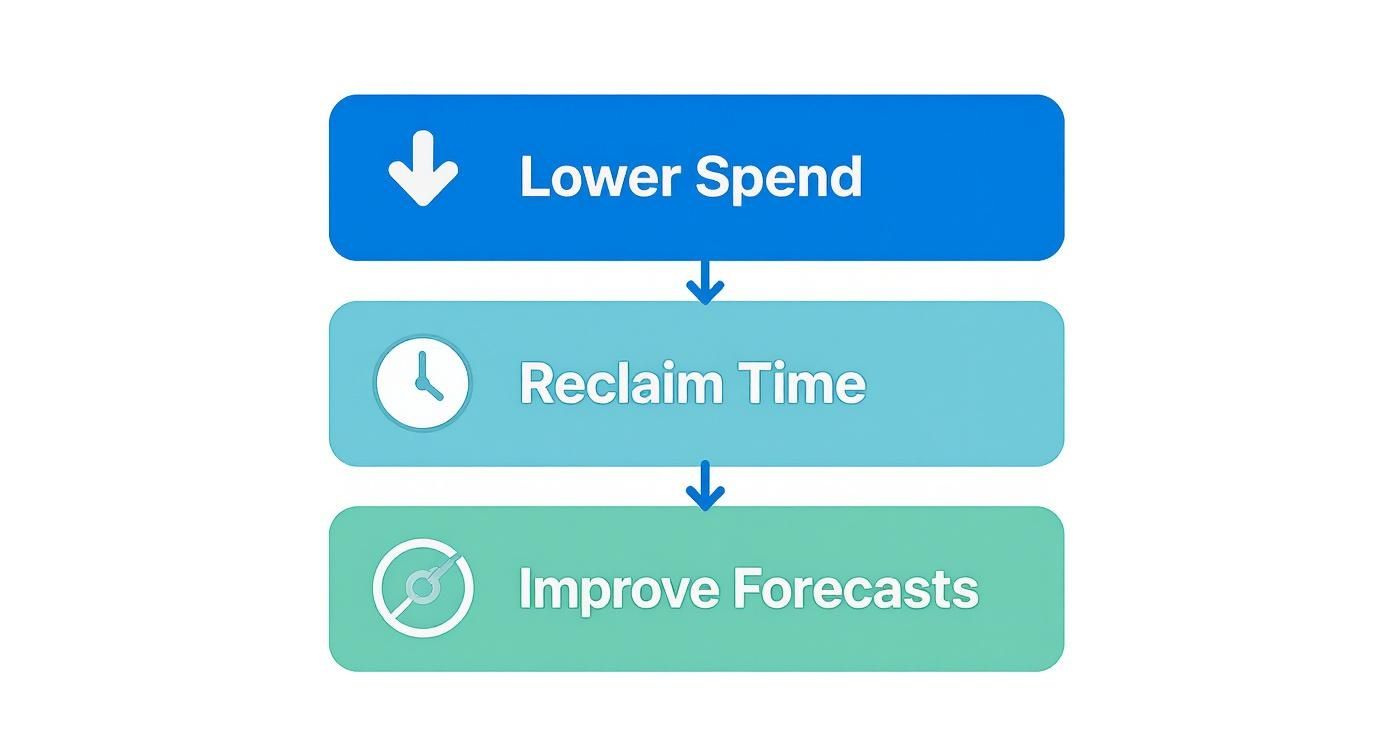
As you can see, the value goes way beyond just a lower bill. It creates a ripple effect of operational and strategic wins across the business.
The Strategic Advantage of a Dedicated Platform
Upgrading to a dedicated platform like CLOUD TOGGLE is like hiring that professional contractor with a full truck of specialized gear for your renovation. It’s an investment designed to deliver professional-grade results, efficiently and predictably. These platforms are built from the ground up to solve the exact problems native tools can’t.
A dedicated solution brings a few key advantages to the table that native tools just can't compete with:
- Powerful, Hands-Off Automation: You can set up automated schedules to power down non-production resources across all your accounts in just a few clicks. This is proactive savings, ensuring you stop paying for idle time without anyone having to lift a finger.
- True Multi-Cloud Visibility: Imagine a single dashboard that brings all your AWS, Azure, and GCP spending together. This unified view gets rid of the blind spots and gives you the complete financial picture you need to make smart decisions.
- Empowering a FinOps Culture: These platforms make it incredibly easy to delegate cost management. With role-based access controls and simple interfaces, you can empower development teams to manage their own resource schedules without handing over the keys to sensitive cloud accounts.
To help you see the differences more clearly, here’s a side-by-side comparison:
Native Cloud Tools vs. Dedicated Optimization Platforms
| Capability | Native Tools (e.g., AWS Cost Explorer, Azure Cost Management) | Dedicated Platform (e.g., CLOUD TOGGLE) |
|---|---|---|
| Primary Function | Cost reporting and basic recommendations | Proactive cost control and automation |
| Automation | Limited; often requires manual scripting or separate services | Advanced, hands-off scheduling and policy enforcement |
| Multi-Cloud Support | None; siloed within a single provider | Centralized dashboard for AWS, Azure, GCP, and more |
| User Experience | Technical; designed for cloud experts | Intuitive; built for both technical and non-technical users |
| Setup & Maintenance | Can be complex to configure across accounts | Quick setup (minutes) with zero ongoing maintenance |
| Delegation | Difficult; requires complex IAM permissions | Simple, with role-based access for developers and teams |
| Best For | Small teams, single-cloud environments, basic cost visibility | Growing companies, multi-cloud, and FinOps-driven teams |
For a more comprehensive breakdown, our guide on different cloud cost optimization tools offers a deeper comparison.
Ultimately, while native tools are a decent place to start, a dedicated platform is the essential next step for any business that’s serious about turning cloud cost management from a reactive headache into a strategic advantage that fuels growth.
Putting Your Optimization Strategy into Action
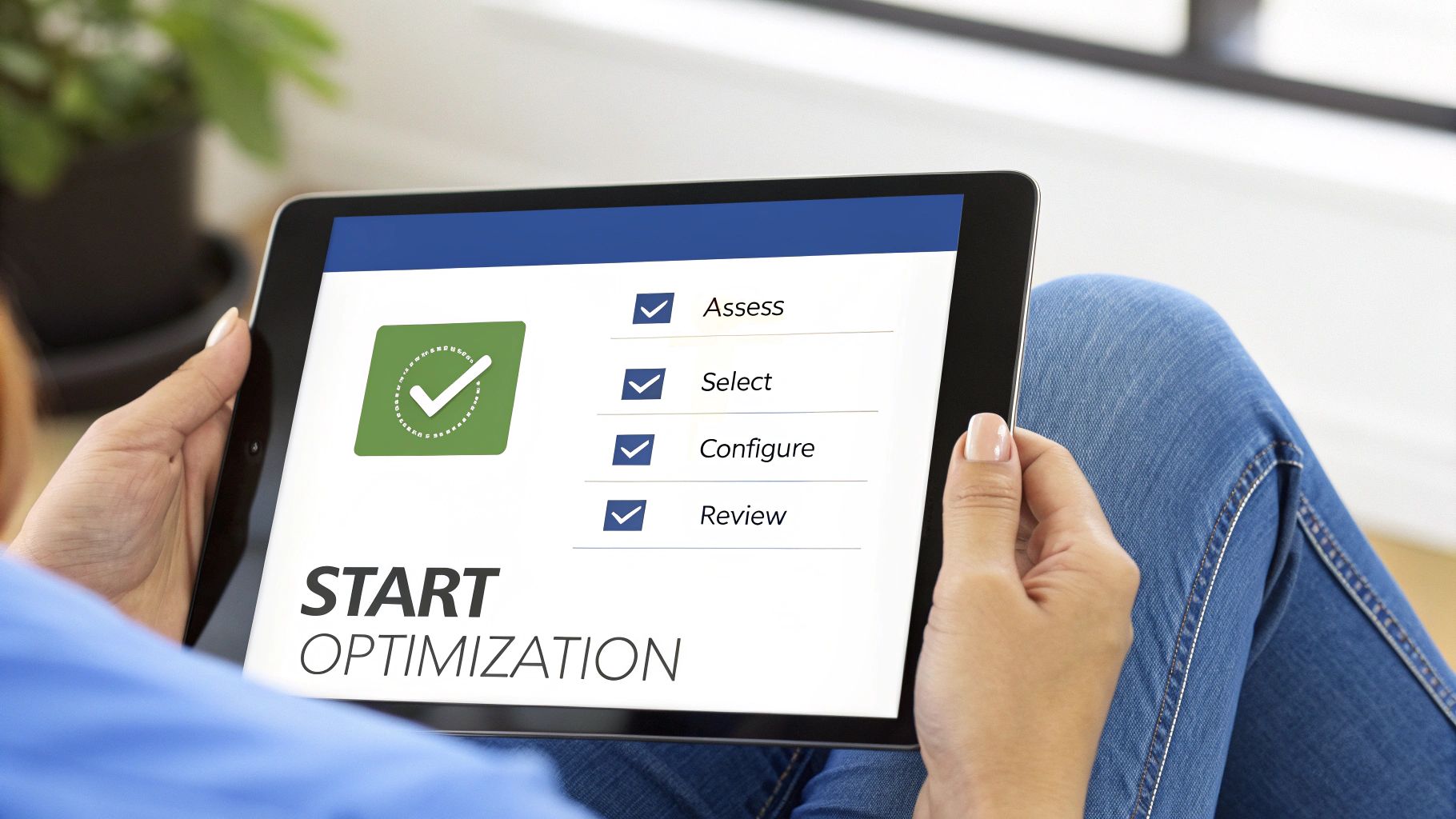
Successfully launching a cloud cost optimization platform isn't just a technical exercise. It’s a cultural shift in how your organization thinks about and manages the cloud. You’re moving from reactive fire-fighting to proactive financial governance, turning your cloud infrastructure into a well-oiled, cost-effective machine.
Getting there requires a clear, step-by-step approach. A structured plan ensures the platform gets deployed correctly and starts delivering real value right away, creating a new operational rhythm centered on financial accountability.
Step 1: Assess and Identify
Before you can fix the leaks, you have to find them. The first step is a deep dive into your current cloud environment to pinpoint the biggest sources of waste. This is all about using the platform's visibility tools to get an honest baseline of your spending habits.
Your initial goals here are simple:
- Hunt for Idle Resources: Find the "zombie" assets that are costing you money for no good reason, such as unattached storage volumes or forgotten test servers.
- Spot Overprovisioning: Look for virtual machines and databases that are consistently oversized for their actual workload. These are prime candidates for rightsizing.
- Analyze Usage Patterns: Use heat maps or reporting features to see when resources are actually being used. This immediately flags non-production environments that can be shut down after hours.
Step 2: Select and Trial
With a clear picture of your waste, you can now pick the right cloud cost optimization platform for your specific problems. Not all tools are created equal, so focus on one that directly addresses the issues you just uncovered. Look for a solution with a straightforward interface and powerful automation that fits your team's skillset.
A great deployment always starts with a great trial. Use the free trial period to connect your cloud accounts, see what kind of savings the platform recommends, and make sure it plays nice with your existing workflows. This is your chance to prove the ROI before you sign anything.
Step 3: Configure and Automate
Once you've made your choice, it’s time to put the platform to work. The initial configuration is where you turn all those insights into action by setting up your first automated savings policies. Always start with the easiest, most impactful changes to get some quick wins on the board and build momentum.
A perfect first move is configuring automated schedules to power down development, staging, and QA environments during nights and weekends. This one action often delivers the biggest savings with the least amount of disruption. After that, work with your engineering teams to review and apply the platform's top rightsizing recommendations.
Step 4: Review and Refine
Cloud cost optimization is never a "one and done" project. It’s a continuous loop of improvement. After your first policies are live, the final step is to establish a regular rhythm for reviewing results and fine-tuning your strategy.
Schedule monthly or quarterly check-ins to:
- Measure Savings: Track the hard dollar cost reductions from your automation policies.
- Find New Opportunities: As your cloud usage changes, new waste patterns will inevitably appear.
- Expand Adoption: Gradually bring more teams onto the platform, building a broader culture of cost awareness.
This continuous cycle makes sure your optimization efforts keep up with your business, turning cost management into a sustainable, strategic advantage.
Frequently Asked Questions
When you're looking at a new tool, the practical questions are always the first to pop up. Let's get right into the most common ones we hear about adopting a cloud cost optimization platform.
How Much Can Our Organization Realistically Save?
This is always the first question, and for good reason. While every organization's setup is different, most businesses see their cloud bills shrink by 15% to 40%.
Your exact savings really depend on your starting point. If you have a lot of non-production resources running 24/7, you're going to see massive, immediate savings just from automated scheduling. The same goes for an organization that has a habit of overprovisioning servers, as rightsizing recommendations will make a huge dent. The platform's real power comes from its ability to sniff out these common sources of waste and put a stop to them.
Is Implementing a Platform a Complex Project?
Getting started with a modern cloud cost optimization platform is surprisingly painless. These aren't the clunky, on-premise software installs of the past. Today's solutions are built for speed.
The setup is usually API-based and takes hours, not weeks. You simply connect your cloud provider accounts with secure credentials, and the platform immediately starts pulling in your cost and usage data. Many teams see their first actionable cost-saving insights on day one, giving you quick wins to show the value right away.
A key benefit of a dedicated platform is its simplicity. The goal is to reduce complexity, not add to it. A fast, non-disruptive setup means your team can focus on saving money, not on managing another complex tool.
How Do These Platforms Handle Kubernetes Costs?
Ah, Kubernetes. It's an amazing technology, but it's also a notorious black hole for costs. Traditional tools just can't keep up with its dynamic nature, making it nearly impossible to figure out who is spending what.
This is a problem that advanced optimization platforms tackle head-on. They provide deep visibility right into your container costs, breaking down spending by cluster, namespace, or even specific labels. This granular view finally lets you attribute costs to the right teams, projects, or applications. By shining a light on container spending, a platform gives you the power to manage one of the fastest-growing parts of your cloud bill.
Ready to stop cloud waste and take control of your budget? CLOUD TOGGLE makes it simple to automate savings with powerful scheduling and access controls. Start your free 30-day trial and see how much you can save.